Printing on PET felt allows for the combination of acoustic functionality with a bespoke visual finish. This enables panels to be better tailored to the character of an interior and the requirements of an overall design concept. In this article, we explain the process, the possibilities it offers, and how finished, printed acoustic panels are created.

What is PET felt?
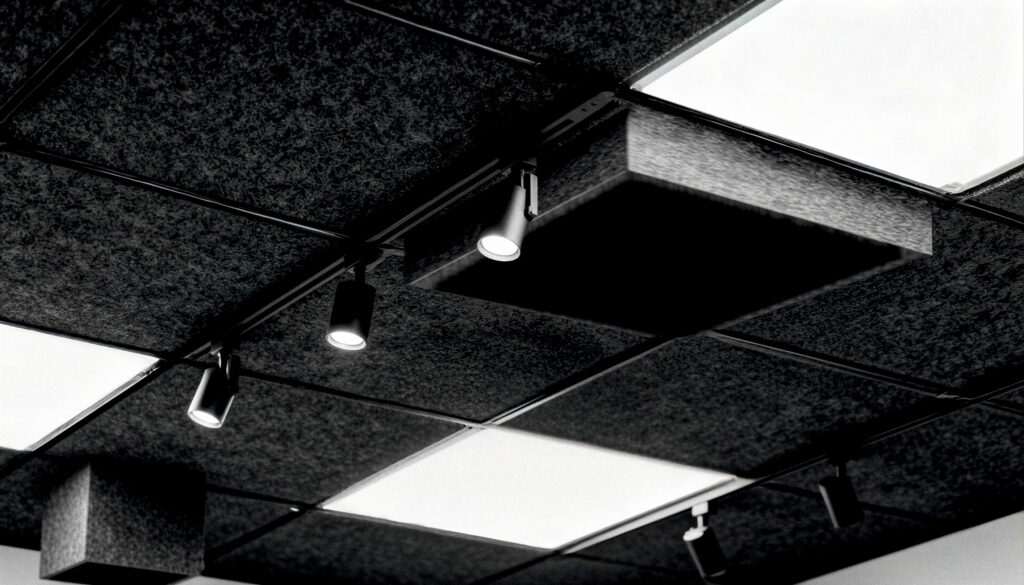
PET felt is a material made from polyethylene terephthalate fibers, used, among other things, for the production of acoustic panels. It is lightweight, durable, and easy to process; its structure helps to limit sound reflections and reduce reverberation within an interior space. The material used by Felthe® contains at least 60% recycled content. It can be precisely cut, engraved, molded, and printed upon.
What does printing on PET felt involve?
Printing on PET felt involves applying a prepared graphic directly onto the surface of the material. At Felthe®, we use a Canon Arizona printer along with genuine Canon consumables. The ink is cured using UV light, resulting in a durable, precise print that requires no long drying time.
Technology enables:
- List Item color reproduction and fine detail,
- applying graphics, logos, and decorative patterns,
- obtaining textures inspired by wood, stone, concrete, or metal.
For larger compositions, the design is pre-adjusted to the dimensions and divisions of the individual panels. This ensures that the pattern is correctly laid out across the entire surface. While the print alters the appearance of the PET felt, it does not change its fundamental form; consequently, the panel retains its acoustic function while gaining a unique, custom finish.
Original Canon inks with GREENGUARD Gold certification
In our printing process, we use genuine Canon inks. They hold the UL GREENGUARD Gold certification, which confirms that they meet stringent requirements regarding chemical emissions from interior finishing materials.
What kind of patterns can be printed on PET felt?
The ability to apply various motifs makes it possible to tailor the appearance of acoustic panels to the materials, color scheme, and function of a given interior. Such prints can serve a decorative purpose, reinforce a brand’s visual identity, or help designate specific zones.
On Felthe® acoustic panels, you can apply, among other things:
- structures inspired by wood, stone, marble, concrete, metal,
- decorative graphics and illustrative motifs,
- geometric patterns,
- logos and elements of visual identity,
- designations for rooms, zones, and circulation paths,
- individual designs prepared by an architect or designer.
Available Felthe® prints include the Noble, Lume, Rawa and Strata textures, among others. These finishes are inspired by wood, stone and other natural surfaces. They differ in color, pattern and intensity, so they can be matched to different architectural concepts. Examples of these finishes can also be seen among our acoustic panels with print.

Order prints on a physical swatch
The color palette, print detail, and the final effect achieved on PET felt can be evaluated using physical samples. Felthe® provides a print swatch book, making it easy to compare different finishes before selecting a solution for your project.

How are acoustic panels with prints made?
We design and manufacture printed acoustic panels in Poland, using our own technological facilities. As a result, the entire process of acoustic panel productionremains under our control – from preparing the concept and graphics to manufacturing the finished elements. We tailor each solution to the dimensions and character of the interior and to the functional and aesthetic assumptions of the project.
- Concept and Graphic Design
We begin by defining the appearance of the panels—their format, shape, color palette, and placement within the interior. We work with both designs from the Felthe® collection and custom graphics created specifically for an individual project. - Fitting the pattern to panel dimensions
We tailor the graphic to the size and segmentation of the individual elements. We take into account the scale of the pattern, its proportions, and how the print should be arranged across the entire surface. - Creating a sample or prototype
Before starting production, we prepare samples and prototypes. This allows for the evaluation of the color scheme, detail reproduction, panel construction, and the overall visual effect on the PET felt. - Applying the print
Once the design has been approved, we apply the pattern directly onto the material. This printing process ensures a precise reproduction of the graphic, logo, or chosen texture. - Cutting, shaping, and joining components
The printed PET felt undergoes further processing. Depending on the design, we employ CNC cutting, shaping, and the joining of multiple layers or components into larger compositions. - Quality control and preparation for installation
We inspect the finished panels for compliance with the design, build quality, and the fit of individual components. We then prepare them for transport and installation at the final site.
Does the print affect the acoustic properties of the panel?
The print serves a visual function and does not alter the acoustic properties of the panel. The effectiveness of the overall solution, however, is determined by the construction of the element and how it is applied within a given space.
Of primary importance are:
- properties and structure of PET felt,
- panel thickness and construction,
- the size of the surface area used in the interior,
- location and method of installation,
- the volume, layout, and finishing materials of the room.
That is why the effect of a print on acoustic parameters should be assessed for a specific product and its configuration. At Felthe®, we tailor the solution as a whole, so that the visual layer is consistent with the function of the panel and the assumptions of the interior. As part of our acoustic consultations we help select solutions suited to the needs and conditions of a specific space.

Where are printed acoustic panels used?
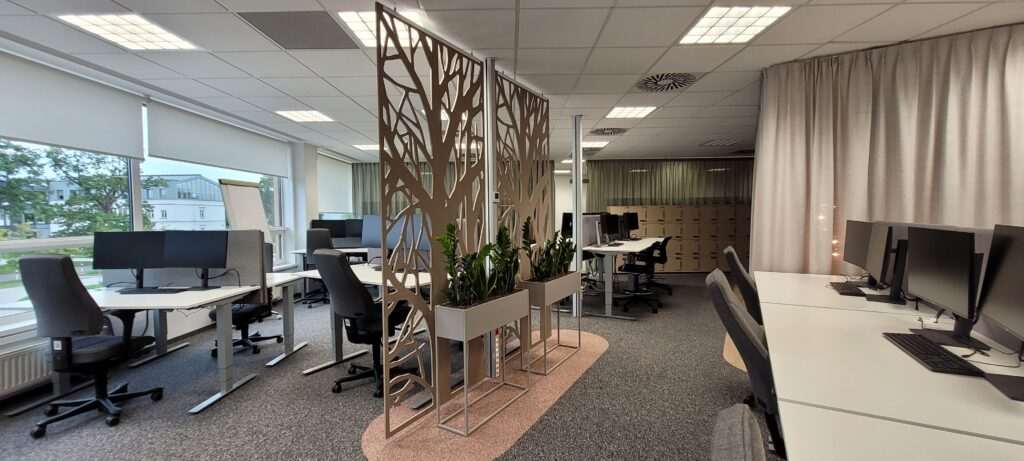
Printed acoustic panels are used wherever the improvement of sound conditions needs to go hand in hand with a cohesive interior design. The printing process allows the surface of the panels to be tailored to the color scheme, materials, and visual identity of a given space.
In offices and conference rooms, they enhance comfort during work and meetings; in hotels and restaurants, they help create cohesive interiors; and in schools, reception areas, shops, or private spaces, they combine acoustic functionality with a bespoke finish. As a result, a single element can simultaneously address the practical, aesthetic, and branding needs of a given space.
Printing on PET felt in the production of Felthe® acoustic panels
Printing is one of the stages in the production of Felthe® acoustic panels. We combine it with CNC cutting, marking, multi-layer bonding, and three-dimensional shaping, which allows us to create both flat surfaces and more complex structures.
We employ all these technologies within a single production process, resulting in finished acoustic solutions—ranging from individual panels to larger wall and ceiling systems. Printing defines their visual aspect, while subsequent stages determine the specific form, structure, and finish of the components.