
60%
material is recycled
Responsible material and a thoughtful process
The PET felt we use is made largely from recycled PET bottles. This gives the material a second life in the form of durable elements used in interior architecture.
It combines acoustic functionality with aesthetics, allowing for a more conscious use of raw materials. It remains stable, is easy to process, and enables the creation of everything from simple panels to more complex, three-dimensional forms.
Less waste, more uses
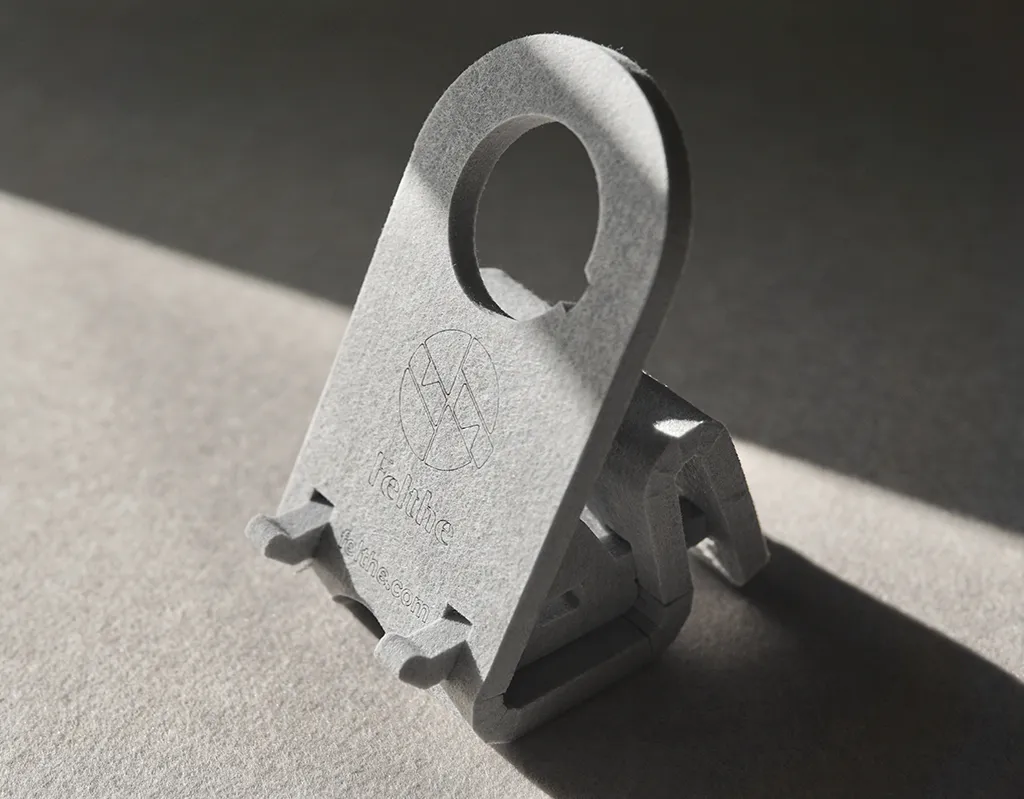
At Felthe®, we ensure that as much as possible of the leftover material generated during production is given a second life. We transform scraps of PET felt into practical, everyday items—such as coasters, phone stands, and accessories for office spaces.
In this way, we reduce the amount of unused material, extend its lifecycle, and turn production offcuts into functional products for our customers.

How is PET felt made?
Step 1
Recycled PET bottles
Processed PET bottles form the base material from which felt is made.
Step 2
Material size reduction
The material is shredded into fine granules, prepared for further processing.
Step 3
Purification of the granulate
The granulate is purified to obtain a homogeneous and stable raw material for fiber production.
Step 6
PET felt board
The fibers are bonded and pressed into finished boards, which we subsequently use to manufacture acoustic panels.
Step 5
Fiber forming
The material is processed into fibers that form the characteristic structure of PET felt.
Step 4
Color in structure
During the production stage, pigment is added, making the color an integral part of the material.
What are Felthe® acoustic panels made of?
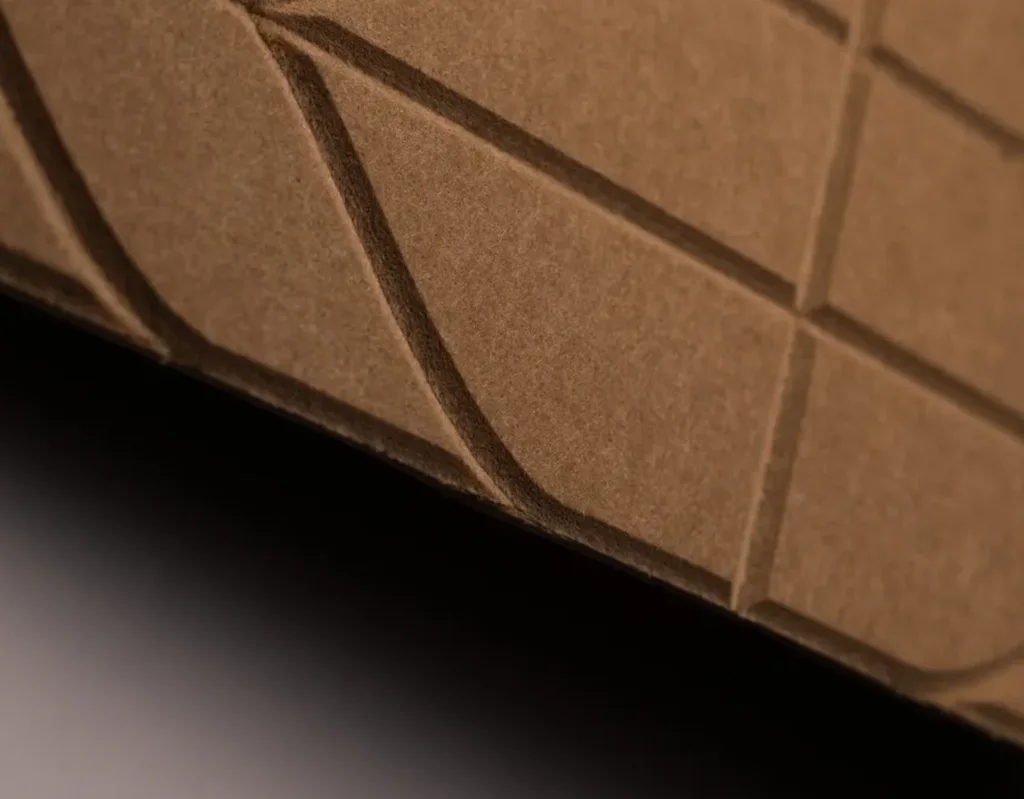
The PET felt we use is made largely from recycled PET bottles. This gives the material a second life in the form of durable elements used in interior architecture.
It combines acoustic functionality with aesthetics, allowing for a more conscious use of raw materials. It remains stable, is easy to process, and enables the creation of everything from simple panels to more complex, three-dimensional forms.
Thickness

Density

Parameters and testing of Felthe® acoustic panels
Our solutions have been tested for acoustic properties and fire safety. The test results confirm the specifications of the materials used in Felthe® acoustic panels and provide the basis for their use in commercial and public projects.
Non-flammability

Acoustics

Sound absorption coefficient αw:
αw = 0.25 (H) (PN-EN ISO 11654:1999: 9 mm / without air gap)
αw = 0.25 (MH) (PN-EN ISO 11654:1999: 12 mm / without air gap)
αw = 1.00 (PN-EN ISO 11654:1999: 12 mm / with 50 mm mineral wool)
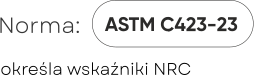
Noise Reduction Coefficient (NRC):
NRC=0.30 (ASTM C423-23: 9mm / no air gap)
NRC=0.40 (ASTM C423-23: 12mm / no air gap)
NRC=1.05 (ASTM C423-23: 12mm / with 50mm mineral wool)
Certified quality and safety
Felthe® products are crafted from certified PET felt, with chemical safety, environmental properties, and performance parameters verified through testing and certifications—including OEKO-TEX Standard 100, SCS, GREENGUARD, and EPD—as well as compliance with ISO 9001, ISO 14001, REACH, and RoHS standards.
For printing, we use inks that hold GREENGUARD Gold certification, which confirms their low chemical emissions and suitability for use in demanding interior environments.
Designations and certificates relate to the materials and components used in production, in accordance with the scope of the manufacturers’ and suppliers’ documentation.